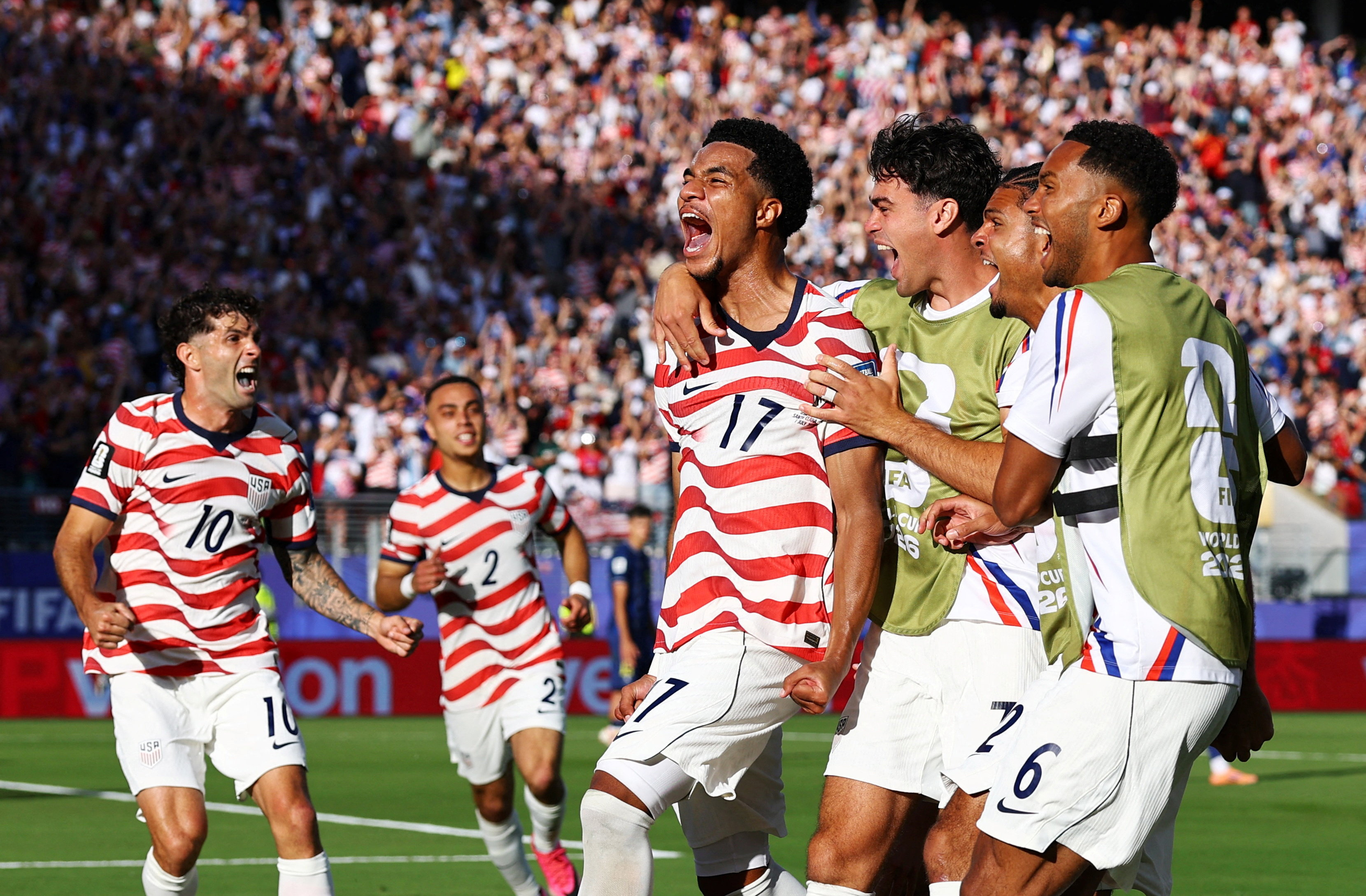
US Striker Balogun Cleared for Belgium Clash
U.S. Men's National Team striker Folarin Balogun will be available for Monday's World Cup round of 16 match against Belgium. FIFA has suspended the red card ban that would have kept him from playing, a decision that significantly bolsters the American squad's attacking options for one of their most critical matches of the tournament.
Balogun received a red card in a previous match after an on-field altercation. The automatic one-game suspension stemmed from a clash with an opponent's foot. While the exact details of the incident remain somewhat unclear, reports indicate that the foul was deemed serious enough by the referee to warrant a straight red card, an offense that typically carries an automatic one-match ban in international football.
The suspension's suspension by the sport's governing body, FIFA, means Balogun can now participate in the crucial knockout stage game. This development comes as a significant relief to the U.S. coaching staff and fans alike, who had been preparing to face a formidable Belgian side without one of their most promising young forwards. The decision by FIFA's disciplinary committee highlights a potential review of the severity of the initial offense or a consideration of mitigating circumstances surrounding the incident.
The USMNT will face Belgium on Monday. The match represents a significant hurdle for the young American squad, who have shown flashes of brilliance throughout the group stage but now face a stern test against a European powerhouse with a wealth of experienced talent. Balogun's availability provides a crucial boost, offering pace, directness, and goal-scoring threat that has been evident in his performances leading up to this point.
Background of the Incident and FIFA's Review
The red card incident involving Folarin Balogun occurred during the United States' final group stage match. While the specific opponent and the precise nature of the clash have not been widely detailed by official sources, it is understood that Balogun was involved in a moment of physical contact that the on-field officials deemed worthy of a sending-off. Such decisions, particularly those resulting in a straight red card, are often subject to review by FIFA's disciplinary bodies, especially when they impact a player's participation in a high-stakes tournament like the World Cup.
Sources close to the USMNT camp suggest that the team's technical staff immediately initiated an appeal or requested a review of the decision. This process likely involved submitting video evidence, player statements, and potentially expert analysis to FIFA, arguing that the offense did not meet the threshold for a red card or that mitigating factors should be considered. FIFA's disciplinary committee, tasked with upholding the Laws of the Game and ensuring fair play, then convened to assess the case.
The suspension of the ban indicates that FIFA's review panel found sufficient grounds to overturn or modify the initial decision. This could be due to a variety of reasons, including a re-evaluation of the contact itself, a determination that the intent was not malicious, or a finding that the referee's initial judgment was perhaps overly harsh given the context of the match. The swiftness of the decision, coming just days before the crucial knockout tie, suggests a thorough but efficient review process.
Implications for the USMNT's Strategy Against Belgium
Folarin Balogun's availability is more than just a numerical advantage; it significantly impacts the tactical approach Gregg Berhalter, the USMNT head coach, can employ against Belgium. Balogun, a dynamic striker who has impressed with his movement and finishing ability, offers a different dimension to the American attack. His ability to play on the shoulder of defenders, his intelligent runs, and his composure in front of goal are qualities the USMNT will desperately need against a disciplined and experienced Belgian defense.
Without Balogun, the U.S. might have been forced to rely on a more static or less direct attacking threat, potentially allowing Belgium to dictate the tempo of the game more easily. His presence allows for a more potent counter-attacking strategy, leveraging his speed to exploit spaces behind the Belgian backline. Furthermore, his ability to hold up the ball and bring midfielders into play provides an alternative outlet, preventing the U.S. from becoming too predictable in their build-up.
The decision also alleviates pressure on other attacking players, such as Timothy Weah and Christian Pulisic, who would have been tasked with carrying a greater offensive burden. With Balogun available, the attacking unit can operate with greater fluidity and shared responsibility, potentially creating more scoring opportunities and keeping the Belgian defense guessing.
What Happens Next: The Belgium Showdown and Beyond
The immediate focus for Folarin Balogun and the USMNT is the monumental task of facing Belgium. The Red Devils, despite a perceived aging core, possess world-class talent in players like Kevin De Bruyne, Romelu Lukaku, and Thibaut Courtois, making them perennial contenders. The match is widely seen as a significant barometer for the progress of this young American generation.
Balogun's performance in this high-stakes encounter will be closely scrutinized. A strong showing could not only propel the U.S. into the quarterfinals but also further solidify his status as a key player for the national team's future. Conversely, a difficult outing would not necessarily diminish his potential, but it would underscore the challenges of adapting to the intense pressure of World Cup knockout football.
Beyond Monday's match, the broader implications of FIFA's decision could extend to how such on-field incidents are judged in future tournaments. The precedent set by suspending a red card ban, even if based on specific circumstances, might encourage teams to pursue reviews more vigorously. For Folarin Balogun himself, this experience, though fraught with initial uncertainty, could ultimately serve as a valuable lesson in managing the emotional and physical demands of elite international competition.