Texas Mandates Bible Stories in Public Schools, Sparking Debate
Texas public schools will soon be required to include Bible stories in their curriculum, a decision that has ignited widespread discussion across the state and the nation. The new policy, signed into law by Governor Greg Abbott, marks a significant shift in public education, raising questions about its implementation, potential impact, and the delicate balance between religious freedom and secular governance in public institutions.
The mandate, officially designated as House Bill 1370, requires the inclusion of age-appropriate Bible stories in public school instruction. Proponents of the bill, including many Republican lawmakers and conservative religious groups, argue that the move aims to expose students to foundational texts that have profoundly influenced Western civilization, morality, and democratic principles. They contend that understanding these narratives is crucial for a comprehensive education in history, literature, and civics, asserting that the Bible is a significant cultural artifact deserving of study, much like other historical or literary works.
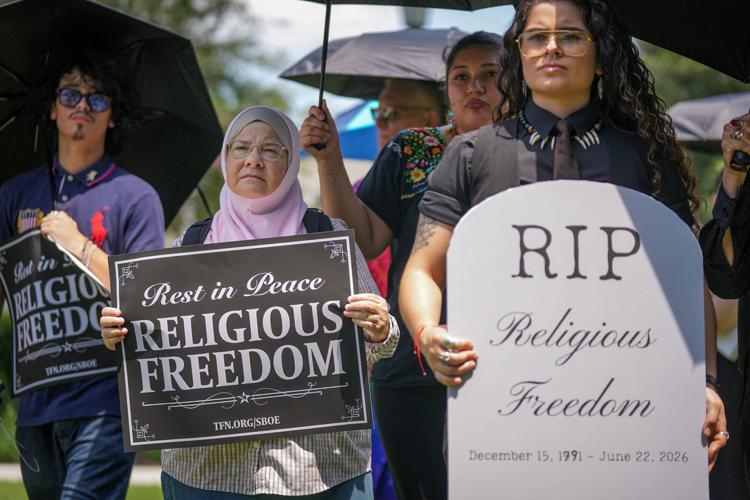
However, critics have voiced significant concerns, primarily centering on the principle of the separation of church and state, a cornerstone of American jurisprudence often cited in challenges to religious instruction in public schools. Organizations such as the American Civil Liberties Union (ACLU) and Americans United for Separation of Church and State have been vocal in their opposition, arguing that the law could lead to the endorsement of religion by the state and potentially alienate students from minority faiths or no faith at all. Legal experts and civil liberties advocates are closely monitoring the situation, anticipating potential legal challenges that could test the constitutionality of the legislation.
The law specifies that the Bible stories must be presented in a neutral and objective manner, without promoting any particular religious belief.
This neutrality clause is a key component of the legislation, intended to assuage fears of proselytization. Lawmakers supporting the bill have emphasized that the curriculum will focus on the historical and literary aspects of biblical narratives, rather than on theological doctrine or religious dogma. The aim, they state, is to foster an understanding of the cultural and ethical frameworks derived from these stories, not to convert students. However, the practical execution of such a mandate in diverse classrooms remains a significant point of contention, with many questioning whether true neutrality can be achieved when dealing with sacred texts.
The legislation also includes provisions for parental opt-out, allowing families to withdraw their children from specific lessons if they object on religious or personal grounds. This measure is intended to address some of the concerns raised by opponents of the mandate, providing a mechanism for families to maintain control over their children's religious education. While intended as a safeguard, some critics argue that opt-out provisions can still create a stigmatizing environment for students who participate, or conversely, for those who opt out, potentially leading to social divisions within schools.
The Texas Education Agency (TEA) is tasked with developing the specific guidelines and curriculum frameworks for the implementation of this new requirement. The details of how Bible stories will be integrated into existing subjects, such as history, literature, or social studies, are still being determined. Educators will face the challenge of selecting appropriate texts and pedagogical approaches that align with the law's neutrality mandate while also being engaging and informative for students of varying backgrounds and beliefs. The TEA's forthcoming guidance will be crucial in shaping the actual classroom experience.
The decision in Texas comes amid a broader national conversation about the role of religion in public life and education. Similar debates have occurred in other states regarding curriculum content, the teaching of evolution, and religious expression in schools. These ongoing discussions reflect a deep-seated societal tension regarding how to accommodate religious diversity and freedom of conscience within the framework of public education. Texas's move is seen by many as a significant development in this national discourse, potentially influencing legislative efforts in other states.
The new law will take effect at the start of the 2024-2025 academic year, meaning educators and school districts have a limited timeframe to prepare for its implementation. The coming months will likely see further debate, the development of specific curriculum materials, and potentially the filing of legal challenges as stakeholders grapple with the implications of this landmark educational policy.