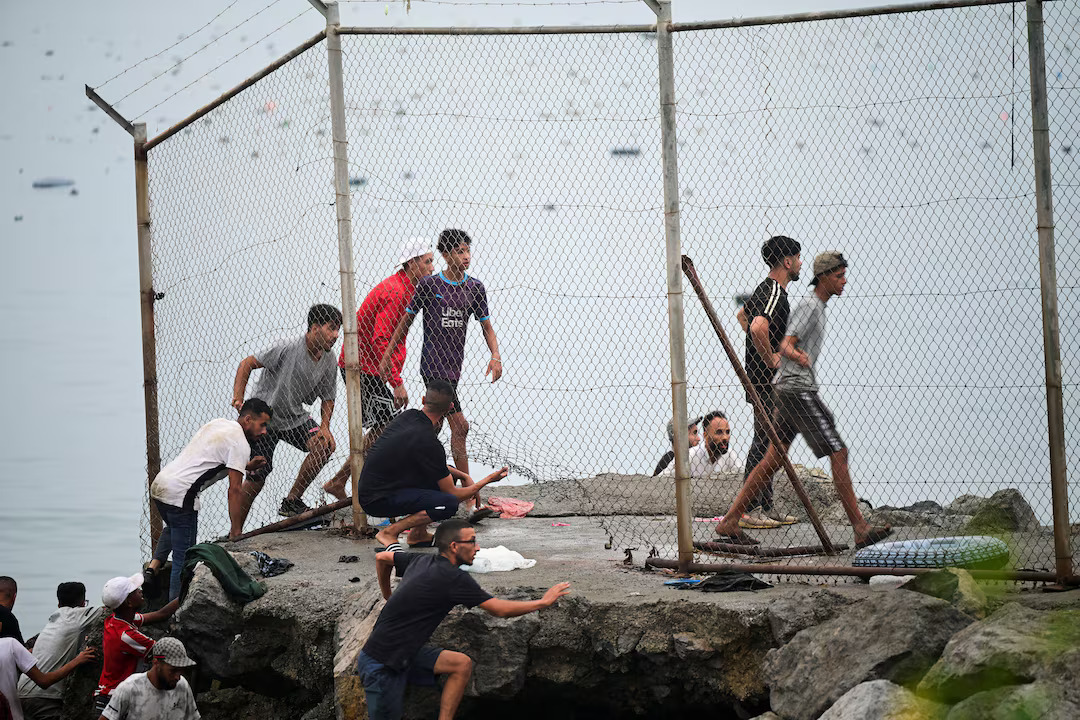
Tens of Thousands of Migrants Reach Spanish Enclave Ceuta in Unprecedented Surge
An unprecedented surge of migrants reached the Spanish enclave of Ceuta on Monday, overwhelming the territory's borders and creating a humanitarian and logistical crisis. Officials estimate that approximately 60,000 individuals entered Ceuta within a 24-hour period, a figure that dwarfs the enclave's permanent population.
This staggering influx represents more than 70% of Ceuta's estimated resident population of around 83,600 people. The sheer scale of the arrivals has prompted an urgent and high-level response from the Spanish government, highlighting the immense pressures on Europe's southern frontiers.
Prime Minister Pedro Sánchez rushed to the territory to address the escalating crisis, describing the situation as a "major challenge" for Spain.
The events in Ceuta underscore the intense migration pressures currently being experienced at Europe's southern borders. Spanish authorities are grappling with the immediate logistical and humanitarian challenges posed by this rapid arrival of people, many of whom are believed to be from sub-Saharan Africa, seeking to enter the European Union.
The enclave of Ceuta, along with its sister territory of Melilla, are the only land borders Spain shares with Africa. They are geographically surrounded by Morocco and are a frequent focal point for irregular migration attempts. Historically, these border crossings have seen sporadic increases in arrivals, often triggered by changes in political relations between Spain and Morocco, or by improved weather conditions making the sea crossing safer. However, the scale and speed of Monday's arrivals are described by officials as entirely without precedent.
The primary method of entry for these migrants appears to have been by swimming around the fortified border fence that separates Ceuta from Moroccan territory. Reports indicate that Moroccan border guards were either unable or unwilling to prevent large numbers of individuals from entering the water and attempting the crossing. This has led to accusations from Spanish officials that Morocco has deliberately relaxed its border controls, a move potentially linked to ongoing diplomatic disputes with Spain over the Western Sahara region. Morocco has not officially commented on the specific reasons for the surge, though it has consistently called for greater European investment and cooperation in managing migration flows.
Upon arrival, many migrants were met by Spanish police and civil guards. The immediate priority for Spanish authorities has been to provide basic humanitarian aid, including food, water, and medical attention, to those who have arrived. Temporary reception centers are reportedly being overwhelmed, and Spanish officials are working to identify individuals and process their claims for asylum or deportation. The sheer volume of arrivals has necessitated the deployment of additional security forces and emergency personnel to the territory.
The situation has ignited a fierce political debate within Spain. Prime Minister Sánchez, whose government has generally adopted a more welcoming stance on immigration compared to some European counterparts, faces significant pressure to regain control of the border and manage the humanitarian fallout. Opposition parties have been quick to criticize the government's handling of the crisis, demanding stronger border security measures and a clearer strategy for dealing with such large-scale arrivals. The pro-immigration stance of the current government has been put to a severe test, with questions arising about its capacity to manage such an unprecedented event.
Internationally, the events in Ceuta have drawn condemnation from human rights organizations, which have raised concerns about the conditions faced by migrants, including the risks associated with the sea crossing and the potential for inadequate reception facilities. The European Union has also expressed its concern, with officials from Brussels reportedly in contact with the Spanish government to offer support and discuss broader strategies for border management and cooperation with North African countries. This incident is likely to intensify calls for a more unified and effective European approach to migration, particularly concerning the external borders of the bloc.
Looking ahead, the situation in Ceuta remains fluid and uncertain. Spanish authorities are working to repatriate many of the migrants, particularly those who do not have a valid claim for asylum. However, the logistical challenges of identifying, processing, and deporting such a large number of people are immense. The diplomatic implications are also significant, with the incident likely to strain relations between Spain and Morocco further and potentially influence broader EU-Africa relations. The long-term impact on Ceuta itself, a small territory already facing economic and social challenges, remains to be seen. The crisis serves as a stark reminder of the complex and often perilous journeys undertaken by those seeking a better life in Europe, and the profound challenges faced by nations on the front lines of migration.