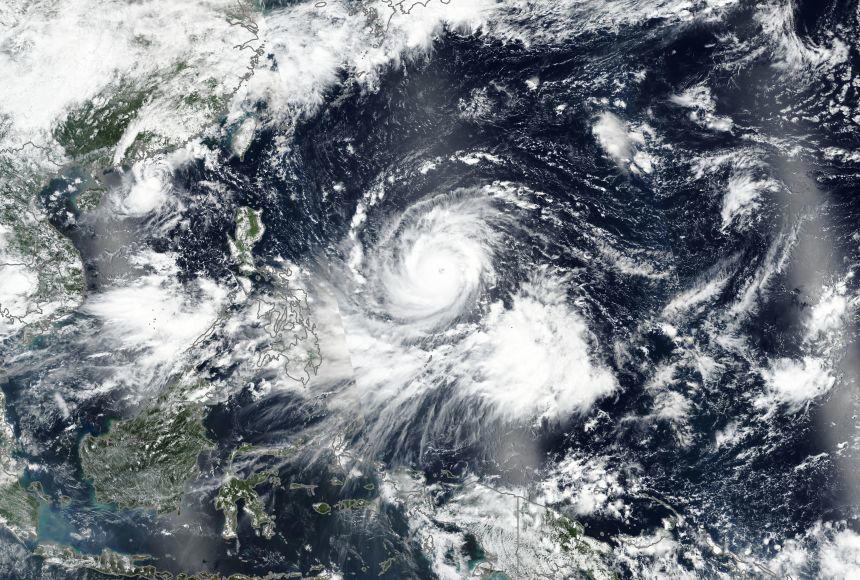
Super Typhoon Bavi Lashes US Pacific Islands with Extreme Winds
Super Typhoon Bavi is nearing Guam, bringing with it extreme and life-threatening winds. The massive cyclone is approaching the Mariana Islands, located east of the Philippines.
The storm, packing sustained winds of nearly 290 kilometers per hour (180 mph) and gusts reaching an astonishing 350 kilometers per hour, has made landfall on US Pacific islands. Rota, one of these islands and part of the Commonwealth of the Northern Mariana Islands, is currently being lashed by the powerful typhoon. The National Weather Service (NWS) in Guam has issued a stark warning, emphasizing the life-threatening nature of the conditions and urging residents to seek immediate shelter.
Bavi was forecast to strike Rota early Monday morning local time. The NWS's advisories paint a grim picture, detailing the potential for catastrophic damage. The sustained wind speeds alone are capable of leveling structures, while the extreme gusts can tear apart even the most robust buildings, posing a severe threat to life and property.
The typhoon is bringing extreme, life-threatening winds.
Landfall has occurred on US Pacific islands as the storm continues its destructive path. Preliminary reports suggest widespread damage to infrastructure, including power lines, communication towers, and homes. Residents are urged to take all necessary precautions, including staying indoors, away from windows, and in the most secure part of their homes. Emergency services are on standby but may face significant challenges in reaching those in need due to the hazardous conditions.
Super Typhoon Bavi's sustained winds are nearing 180 mph, placing it firmly in the category of an extremely dangerous storm. The Saffir-Simpson Hurricane Wind Scale classifies Category 5 storms, the highest level, as having sustained winds of 157 mph or greater. Bavi's intensity, therefore, surpasses this threshold, indicating a significant threat of widespread devastation. The storm's rapid intensification in the days leading up to landfall has been a cause for concern among meteorologists, highlighting the volatile nature of tropical cyclones in the western Pacific.
The Mariana Islands, a chain of volcanic islands in the western Pacific, are no strangers to powerful typhoons. The region is situated within one of the most active typhoon basins in the world. However, the sheer ferocity of Bavi has prompted heightened alert levels. The potential for storm surge, heavy rainfall leading to flash flooding, and widespread power outages are all significant concerns for the low-lying islands. The economic and social implications of such a devastating storm can be long-lasting, impacting everything from agriculture and tourism to the availability of essential services.
The approach of Super Typhoon Bavi also underscores the broader conversation around climate change and its influence on extreme weather events. While attributing any single storm directly to climate change is complex, scientific consensus suggests that warming ocean temperatures can fuel more intense and rapidly intensifying tropical cyclones. This trend has been observed in recent years, with a notable increase in the number of powerful typhoons and hurricanes globally. For communities like those in the Mariana Islands, which are particularly vulnerable to the impacts of rising sea levels and more extreme weather, these events represent an existential threat.
As Bavi continues its trajectory, the focus shifts to the immediate aftermath and the long-term recovery efforts. The resilience of the communities in the Mariana Islands will be put to the test. The coordinated response from local authorities, the US federal government, and potentially international aid organizations will be crucial in providing relief, restoring infrastructure, and rebuilding lives. The coming days and weeks will reveal the full extent of Bavi's impact, serving as another stark reminder of the power of nature and the urgent need for adaptation and mitigation strategies in the face of a changing climate.
The path of Bavi after impacting Rota is expected to take it towards the Korean Peninsula. Forecasters are closely monitoring its evolution, with concerns that it could bring significant rainfall and wind to parts of South Korea and North Korea. The storm's ability to maintain its intensity over land will be a key factor in determining the severity of its impact on the Korean Peninsula, which has also experienced increasingly severe weather events in recent years.