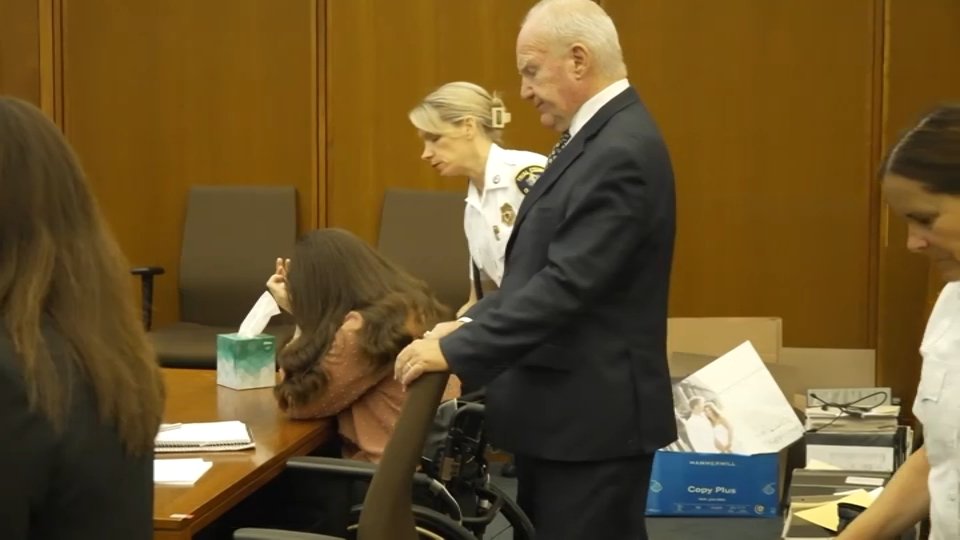
Psychiatrists Testify Lindsay Clancy Showed No Signs of Psychosis
Psychiatrists who treated Lindsay Clancy prior to the tragic deaths of her three young children in Duxbury, Massachusetts, began testifying Friday in her murder trial. The testimony from these medical professionals is expected to be central to the defense's case, as it directly addresses the defendant's mental state in the period leading up to the alleged crimes.
Prosecutors called psychiatrist Jennifer Tufts to the stand on Friday. Her testimony aimed to establish that Clancy did not exhibit overt symptoms of psychosis during her treatment, a crucial point for the prosecution as they build their case. The state is attempting to demonstrate that Clancy was legally sane and capable of forming the intent required for murder charges. This line of questioning seeks to dismantle any argument that Clancy was suffering from a severe mental disease or defect that would render her unable to understand the nature or wrongfulness of her actions.
The legal proceedings have been marked by intense scrutiny and tense exchanges, including a notable moment where the judge presiding over the case had a tense exchange with the defense. This development underscores the high stakes of the trial and the complex legal and medical issues at play. The defense is anticipated to present evidence and arguments suggesting that Clancy was experiencing a severe mental health crisis, potentially including postpartum psychosis, which they will argue absolves her of criminal responsibility.
The core of the testimony from both the prosecution's and potentially the defense's medical experts revolves around Clancy's mental state in the days and weeks preceding the alleged murders of her children, Cora, 5, Dawson, 3, and Callan, 8 months. The prosecution is working diligently to counter potential defense arguments regarding her mental health by presenting a narrative that Clancy was lucid and aware of her actions. This involves meticulously detailing her interactions with medical professionals, her reported thoughts and behaviors, and any documented diagnoses or lack thereof.
Dr. Tufts' testimony, as presented by the prosecution, is intended to paint a picture of a patient who, while perhaps struggling with postpartum depression or other mental health challenges, did not exhibit the hallmark signs of psychosis. These signs typically include hallucinations, delusions, disorganized thinking, and a significant break from reality. The prosecution's strategy appears to be to concede that Clancy may have been suffering from postpartum depression but to argue that this condition did not rise to the level of a psychotic break that would negate criminal culpability.
This testimony is particularly significant given the defense's stated intention to pursue an insanity defense. In Massachusetts, an insanity defense requires proving that the defendant, due to a mental disease or defect, was unable to appreciate the nature, quality, or wrongfulness of her actions. The absence of clear psychotic symptoms, as suggested by the prosecution's witnesses, presents a significant hurdle for the defense. It forces them to find alternative avenues to demonstrate that Clancy's mental state, even without overt psychosis, rendered her legally insane at the time of the incident.
The defense team, led by attorney Kevin Reddington, has previously indicated they would argue that Clancy was suffering from postpartum psychosis, a severe mental illness that can occur after childbirth. This condition can involve delusions and hallucinations, leading to a distorted perception of reality. If the jury believes that Clancy was experiencing such a state, it could lead to a verdict of not guilty by reason of insanity. However, the testimony of psychiatrists like Dr. Tufts, who treated Clancy, directly challenges this assertion by stating that her symptoms did not align with a psychotic episode.
The prosecution's focus on the absence of psychosis is a strategic move to highlight Clancy's apparent awareness and control during the events. They may present evidence of her actions before and after the deaths, such as searching for information online or attempting to end her own life, as indicators of a conscious state rather than an involuntary psychotic episode. The defense, conversely, will likely seek to interpret these actions through the lens of a severe mental disturbance, arguing that even seemingly rational behavior can be a manifestation of profound psychological distress.
The trial is expected to involve extensive expert testimony from psychiatrists and psychologists on both sides, each offering their professional opinions on Clancy's mental state. The jury will be tasked with weighing this conflicting expert testimony and determining whether Clancy met the legal standard for insanity at the time of the alleged offenses. The outcome of the trial will hinge on how effectively each side can persuade the jury regarding Clancy's mental capacity and responsibility for the deaths of her children.
Key facts: Psychiatrists are testifying in the Lindsay Clancy murder trial. Testimony suggests Clancy did not show overt signs of psychosis during her treatment, a point being emphasized by the prosecution. This is a key development in the ongoing legal proceedings, as it directly impacts the viability of a potential insanity defense.