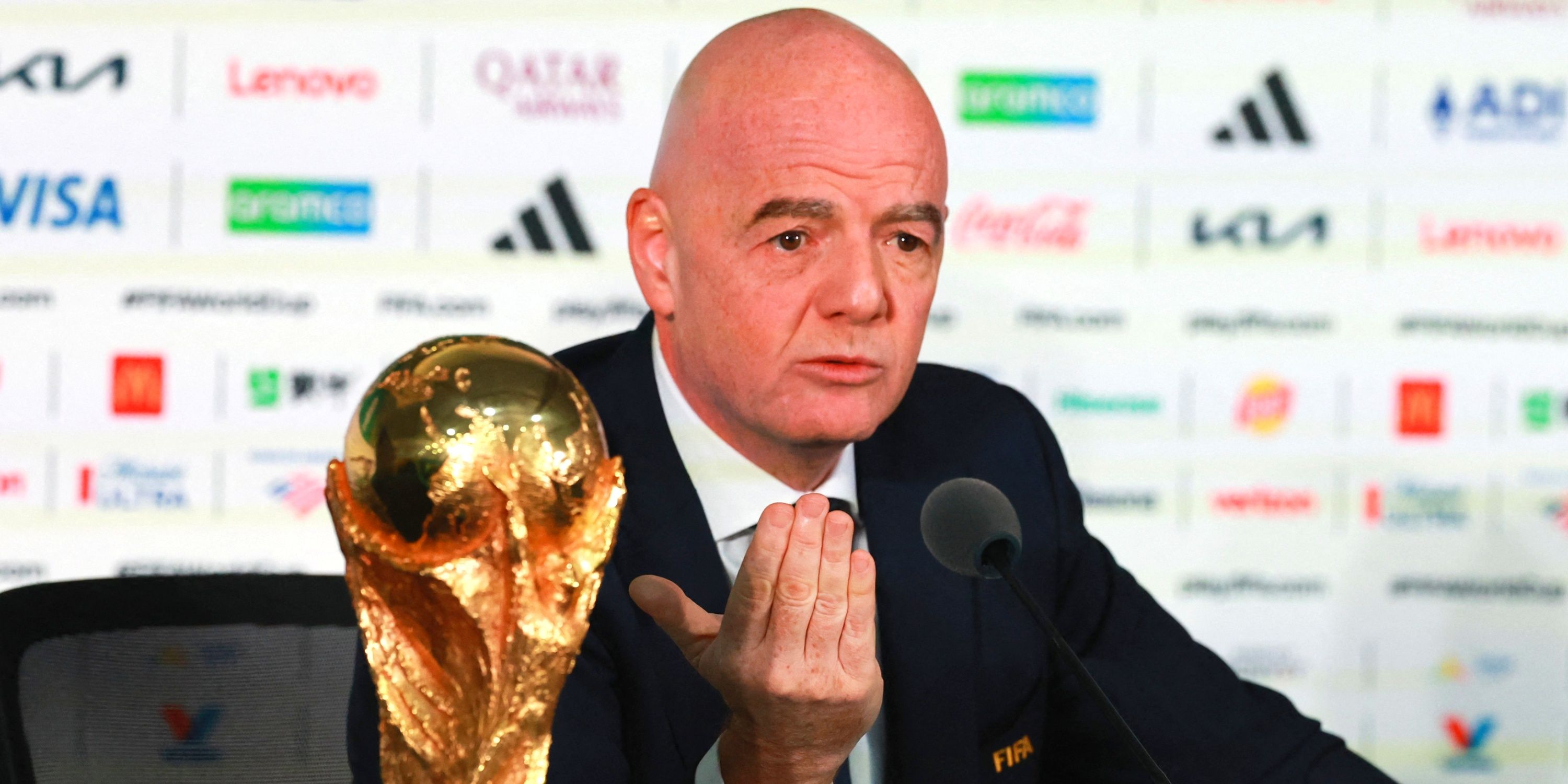
FA Expresses Deep Concern Over FIFA Commercial Proposals, Threatening World Cup Boycott
The Football Association (FA) has officially voiced significant concerns regarding FIFA's ambitious proposals to sell stakes in its most prestigious tournaments, including the World Cup. These plans have triggered an emergency meeting of UEFA's 55 member associations, signaling a potential seismic shift in the global football governance landscape and raising the specter of an unprecedented boycott of the sport's pinnacle event.
Sources close to the FA indicate that the apprehension centers on the profound and potentially detrimental impact of commercializing key international football events. This strategic pivot by FIFA, if enacted, could fundamentally alter the established order of international football governance, shifting power dynamics and potentially prioritizing commercial interests over sporting integrity and equitable competition.
The FA stated its position is one of deep concern regarding the proposed commercialization of FIFA's flagship competitions. The association believes such a move could undermine the long-term health and fairness of the global game.
The emergency discussions among UEFA's 55 member associations are not merely procedural; they are actively exploring the possibility of a coordinated boycott of the FIFA World Cup. Such a collective action by Europe's powerful footballing nations would represent a substantial and potentially crippling challenge to FIFA's authority and its financial projections. The unified stance of UEFA members has historically been a significant force in shaping FIFA's decisions, and a boycott would amplify this influence to an extreme degree.
The potential for a World Cup boycott underscores the gravity of the situation for European football's governing body. It signals a strong and unified opposition to FIFA's current strategic direction, which appears to be leaning heavily towards private investment and commercial partnerships for its major events. UEFA, representing a significant portion of FIFA's revenue and a substantial bloc of voting power, views these proposals as a direct threat to the principles of football governance and the equitable distribution of resources within the sport.
FIFA's proposed stake sales are reportedly aimed at generating substantial, long-term revenue streams, potentially through partnerships with private equity firms or other investment groups. While FIFA has argued that such an influx of capital would be reinvested into football development globally, the implications for the sport's integrity, competitive balance, and the autonomy of national federations remain a primary worry for stakeholders. Critics argue that introducing external commercial interests into the ownership structure of major tournaments could lead to conflicts of interest, biased decision-making, and a dilution of the democratic principles that have traditionally underpinned FIFA's operations.
UEFA's 55 member associations are scheduled to convene for a critical deliberation on how to formulate a unified and robust response to FIFA's controversial plans. The agenda is expected to include detailed analysis of the proposed commercial structures, potential legal ramifications, and the feasibility and impact of various countermeasures, including the extreme measure of a World Cup boycott. The outcome of this meeting will be closely watched by football federations worldwide, as it could set a precedent for the future governance and commercialization of international football.
Background to the Dispute
This latest friction point between FIFA and UEFA is not an isolated incident but rather the latest chapter in a long-standing, often tense, relationship. UEFA, as the continental confederation for Europe, has consistently advocated for a more decentralized and democratically governed FIFA, often clashing with the world governing body's centralized power structures and, at times, its perceived overreach. Historically, UEFA has been a powerful counterweight to FIFA's executive decisions, leveraging its significant financial clout and the collective influence of its member nations.
The current FIFA administration, under President Gianni Infantino, has been actively seeking innovative revenue streams and greater financial stability for the organization. Proposals to monetize major assets, such as the World Cup, have been floated before, but the current iteration appears to involve a more direct and significant transfer of equity to external investors. This approach contrasts sharply with UEFA's model, which, while increasingly commercialized, maintains a stronger degree of control and ownership by its member associations.
Potential Repercussions of a Boycott
A boycott of the World Cup by UEFA member nations would have profound and far-reaching consequences. Financially, it would represent a catastrophic blow to FIFA's revenue projections, potentially jeopardizing its development programs and operational capacity. The global broadcast rights and sponsorship deals for the World Cup are heavily reliant on the participation of major European footballing nations, whose fan bases and commercial appeal are immense. The absence of teams like Germany, France, England, Spain, and Italy would significantly diminish the tournament's global appeal and commercial viability.
Beyond the financial implications, a boycott would trigger a significant crisis in football governance. It would expose deep divisions within the global football community and could lead to a fragmentation of the sport, with potentially rival tournaments emerging. The integrity of the World Cup as the ultimate global footballing spectacle would be severely undermined. Furthermore, such a drastic measure could lead to protracted legal battles and complex negotiations to resolve the impasse.
FIFA's Stated Rationale and UEFA's Counterarguments
FIFA has publicly stated that its proposals are designed to secure long-term financial security and to facilitate greater investment in football development projects across all confederations. The organization argues that bringing in strategic partners with expertise in global business and marketing will enhance the commercial appeal of its events and generate funds that can be distributed more widely, particularly to emerging football nations. FIFA's leadership has often emphasized the need for innovation and adaptation in the modern sporting landscape.
However, UEFA and its member associations counter that these proposed stake sales represent a dangerous privatization of core football assets. They argue that FIFA's primary responsibility is to govern the sport in the best interests of its members and fans, not to maximize returns for external shareholders. Concerns are also being raised about the potential loss of control over the scheduling, format, and integrity of tournaments, as external investors may push for decisions that prioritize profit over sporting considerations. The precedent set by such a move could also encourage other confederations or even individual federations to seek similar commercial arrangements, leading to a fractured and potentially less equitable global football ecosystem.
The Path Forward
The emergency meeting of UEFA's 55 member associations is expected to be a pivotal moment. The discussions will likely focus on consolidating a united front and exploring all available options, from diplomatic pressure and legal challenges to the ultimate sanction of a boycott. The FA's strong stance is indicative of the broader sentiment within European football. The coming days and weeks will be crucial in determining the future direction of international football governance and the potential impact on one of the world's most beloved sporting events.