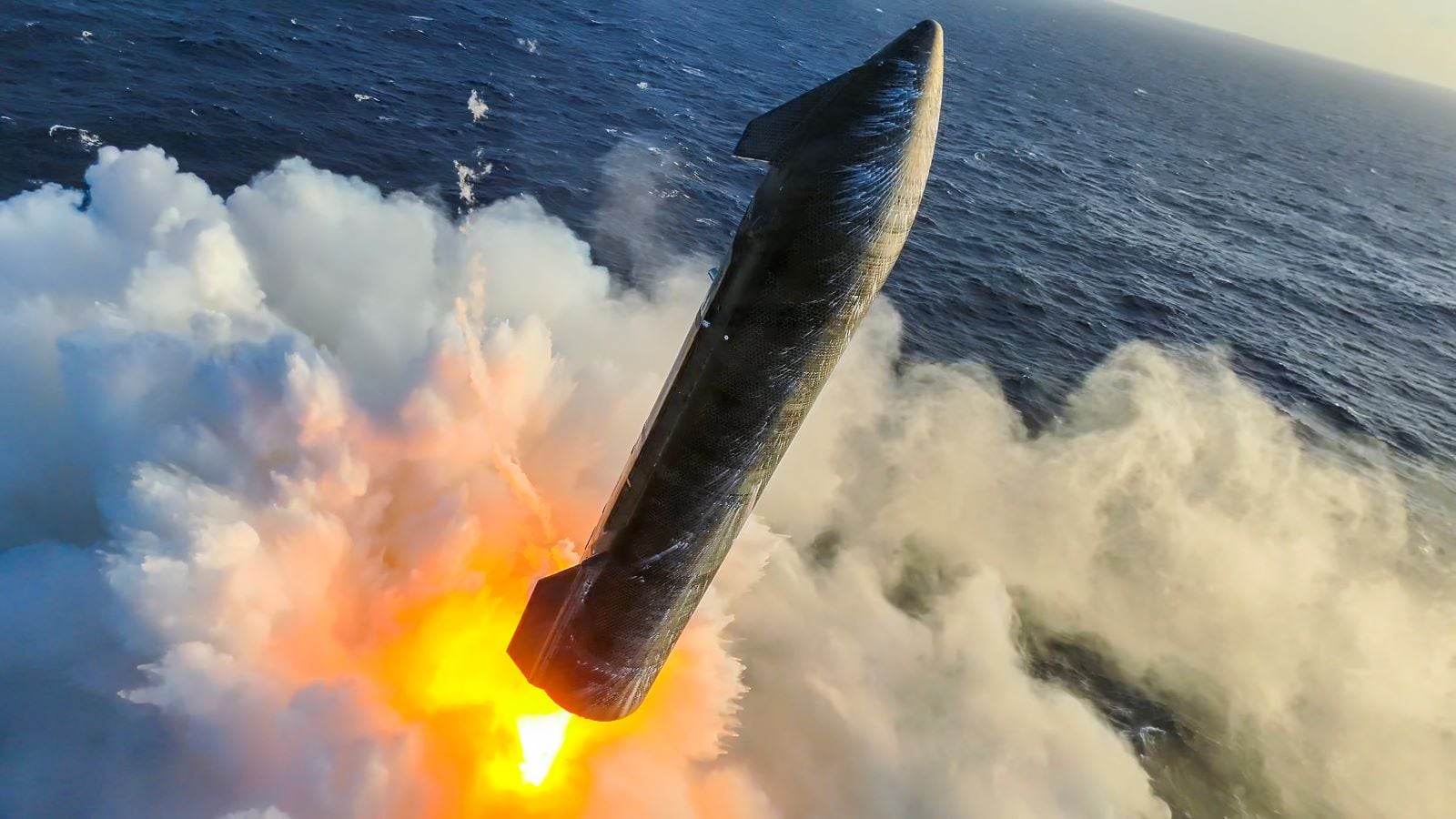
SpaceX Explores Crash Insurance in Potential Financial Shift
SpaceX, the pioneering aerospace company founded by Elon Musk, is reportedly considering the acquisition of crash insurance. This move, if enacted, would represent a significant financial strategy for the company, potentially altering its approach to risk management in the high-stakes world of private spaceflight.
The decision to explore such insurance could signal a new phase in SpaceX's financial planning. It may reflect a growing confidence in their operational stability, a testament to years of iterative design and rigorous testing, or a proactive approach to mitigating potential risks associated with increasingly ambitious and complex space missions. As SpaceX pushes the boundaries with projects like Starship, the potential for catastrophic failure, though statistically reduced, remains a consideration that warrants robust financial safeguards.
While specific details regarding the type of insurance being considered, the potential providers, and the estimated costs remain undisclosed, the potential for SpaceX to secure crash insurance underscores the evolving financial landscape of private spaceflight. Such policies are typically designed to cover substantial losses incurred during launch failures, in-orbit incidents, or other catastrophic events that could result in the destruction of valuable hardware. For a company investing billions in reusable rocket technology and ambitious interplanetary goals, the financial implications of a single major failure can be immense.
The development was first reported by Bloomberg News, citing sources familiar with the matter. The report suggests that SpaceX has been in discussions with insurance underwriters to explore options for protecting its assets against launch and mission failures.
SpaceX has achieved remarkable success in its operational history, successfully launching and landing its Falcon 9 rocket hundreds of times. This track record of reliability has been a cornerstone of its business model, enabling cost reductions through reusability and building confidence among its commercial and government clients. However, the inherent risks of space exploration mean that failures, while infrequent, are not impossible. The company's most ambitious program, Starship, designed for missions to the Moon and Mars, is still in its developmental stages and has experienced several test flight anomalies, including spectacular explosions during landing attempts. These events, while providing valuable data for improvement, also highlight the significant risks involved.
The Financial Rationale Behind Crash Insurance
Securing crash insurance could offer SpaceX several strategic financial advantages. Firstly, it provides a crucial financial backstop against potentially devastating losses. The cost of building and launching a single Starship vehicle, for instance, is estimated to be in the tens of millions, if not hundreds of millions, of dollars. A catastrophic failure could wipe out a significant portion of this investment. Insurance would transfer a portion of this financial risk to an underwriter, allowing SpaceX to continue its ambitious development and operational plans without the existential threat of a single loss.
Secondly, for a company with significant capital expenditure and ambitious long-term goals, insurance can be a tool for financial planning and stability. It allows for more predictable budgeting and can reassure investors and lenders about the company's ability to weather unforeseen setbacks. As SpaceX seeks to scale its operations, particularly with the Starlink satellite constellation and the development of Starship for cargo and crewed missions, managing financial risk becomes paramount.
Furthermore, the insurance market for space assets has matured considerably over the years. While historically expensive and complex, specialized underwriters now offer a range of policies tailored to the unique risks of space launches and operations. SpaceX's move could also be a signal that the company is reaching a level of maturity where such financial instruments are seen as a standard, rather than exceptional, part of its operational framework.
Implications for the Private Space Industry
The potential adoption of crash insurance by SpaceX could have broader implications for the burgeoning private space industry. As more companies venture into space with increasingly complex and expensive hardware, the need for robust risk management solutions will grow. If SpaceX, a company often seen as a trendsetter, embraces comprehensive crash insurance, it could normalize the practice and potentially drive down premiums across the sector as insurers gain more data and experience with private space ventures.
This move also speaks to the increasing commercialization of space. While government agencies like NASA often self-insure or have specific contractual arrangements, private companies must navigate the commercial insurance market. SpaceX's potential entry into this market on a larger scale could be seen as a sign of its increasing integration into the traditional financial ecosystem.
What Happens Next?
The next steps will likely involve SpaceX finalizing its insurance strategy and potentially announcing a partnership with one or more insurance providers. The terms of any such policy will be closely watched, as they will provide insight into how the insurance market assesses the risks associated with cutting-edge aerospace technology. This could include the specific assets covered (e.g., individual rockets, Starship vehicles, satellite payloads), the deductibles, and the premiums involved. The successful acquisition of comprehensive crash insurance would further solidify SpaceX's position as a major player in the global aerospace and technology sectors, demonstrating a sophisticated approach to managing the inherent risks of pushing the frontiers of space exploration.