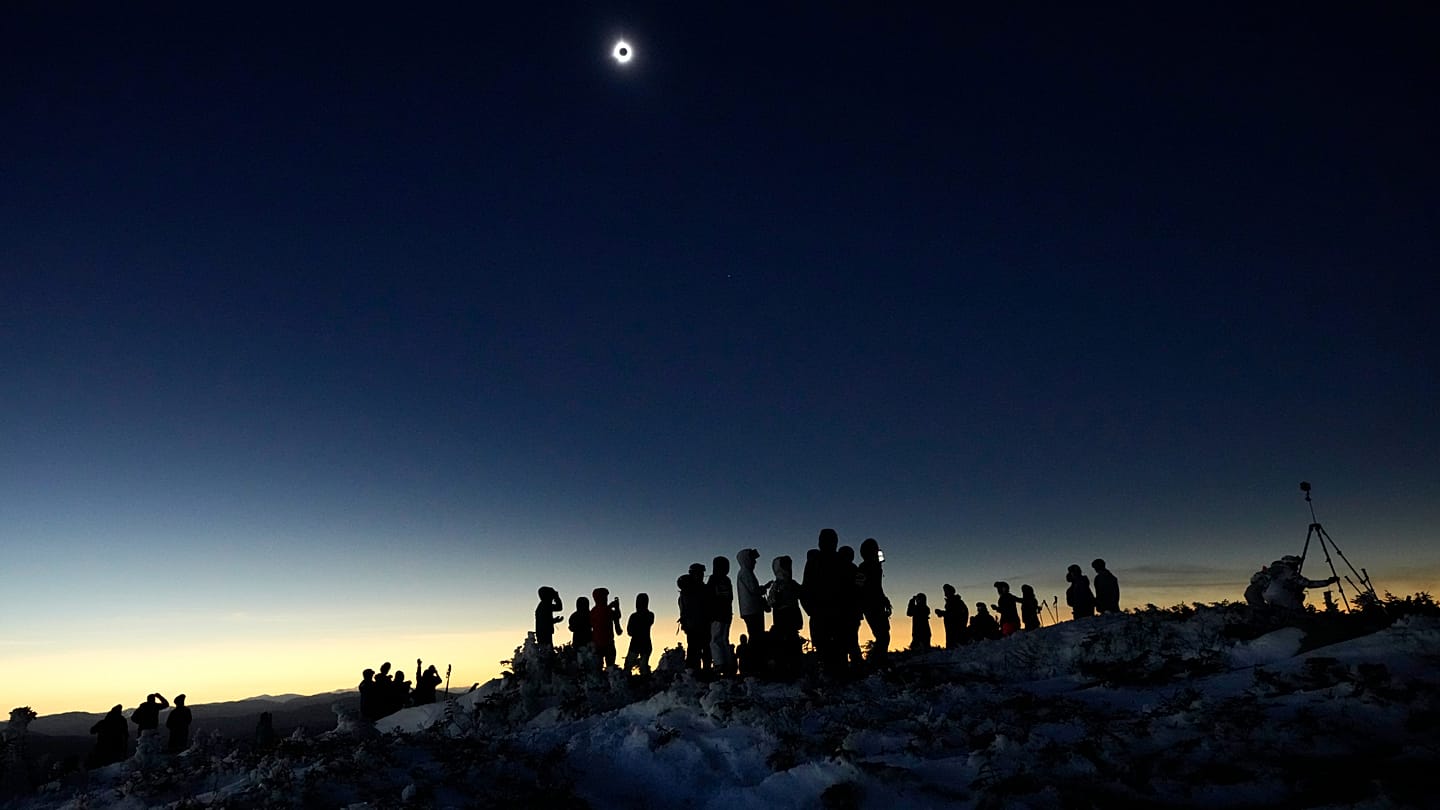
Total Solar Eclipse Dazzles Crowds Across Europe
Millions of people across Europe witnessed a spectacular total solar eclipse on August 12, 2026. The celestial event plunged parts of the continent into brief, midday darkness, captivating onlookers from the Iberian Peninsula to the British Isles. This rare astronomical alignment, where the Moon perfectly obscured the Sun, transformed familiar landscapes into an otherworldly twilight, sparking awe and wonder among a diverse array of spectators.
Spain and the United Kingdom were among the nations where the full eclipse was visible, with prime viewing locations drawing significant crowds. In Spain, the path of totality, the narrow band where the Sun is completely hidden, traversed a significant portion of the country, including regions like Catalonia and the Balearic Islands. Cities such as Barcelona and Palma de Mallorca became focal points for astronomical enthusiasts and casual observers alike. In the United Kingdom, while the eclipse was not total across the entire nation, southern regions experienced a significant partial eclipse, with many flocking to coastal areas and elevated viewpoints to catch the most dramatic phase. Other European nations, including France, Portugal, and Italy, also reported widespread observation of a substantial partial eclipse, adding to the continental scale of this astronomical spectacle.
“Total darkness, then sunset as full eclipse wows spectators in Spain,” reported the Honolulu Star-Advertiser, highlighting the dramatic shift in daylight that characterized the peak of the event. This vivid description captures the profound sensory experience of witnessing the sun's corona emerge as the lunar disk slides into place.
The event offered a breathtaking display as the moon passed directly between the Earth and the sun. This precise alignment, a cosmic ballet that occurs only when the Moon's orbit brings it into perfect conjunction with the Sun as viewed from Earth, rendered the sun completely invisible for a period, typically lasting only a few minutes in any given location. During totality, the Sun's ethereal corona, its outer atmosphere, became visible as a shimmering halo around the dark silhouette of the Moon. This phenomenon, normally hidden by the Sun's intense glare, is a sight rarely witnessed by the naked eye and is a primary draw for eclipse chasers.
The August 12, 2026, total solar eclipse was observed across Europe, with millions witnessing the event as day briefly turned to night. The sheer scale of observation was facilitated by advancements in communication and travel, allowing people to converge on optimal viewing sites. Social media platforms buzzed with shared images and videos, creating a collective global experience. Beyond the visual spectacle, the eclipse also provided a unique opportunity for scientific observation. Astronomers utilized the period of totality to conduct research on the Sun's corona, studying its temperature, composition, and magnetic fields. These observations can provide crucial insights into solar activity, space weather, and its potential impact on Earth's technological infrastructure, from satellites to power grids.
The experience of a total solar eclipse is often described as profound and deeply moving. As the sky darkens, temperatures can drop noticeably, and the behavior of nocturnal animals may shift. Birds have been known to fall silent, and insects may begin their evening routines. This disruption of the natural diurnal cycle adds another layer of wonder to the astronomical event. For many, it serves as a powerful reminder of humanity's place within the vastness of the cosmos and the intricate workings of our solar system. The shared experience of witnessing such a grand celestial event also fostered a sense of community among onlookers, uniting people from different backgrounds in a moment of collective astonishment.
The planning and anticipation leading up to the eclipse were considerable. Astronomical societies and science organizations across Europe provided extensive information and viewing guides to the public. Many cities and towns located within the path of totality organized special events, festivals, and viewing parties. Educational institutions incorporated the eclipse into their summer programs, offering students hands-on learning experiences. The economic impact was also notable, with tourism to prime viewing locations seeing a significant boost as travelers journeyed to witness the phenomenon.
Looking ahead, the August 12, 2026, eclipse serves as a prelude to future celestial events. While total solar eclipses are relatively rare in any given location, the Earth experiences several solar eclipses each year, some total, some annular, and some partial. The next significant total solar eclipse visible from parts of North America is scheduled for 2024, generating its own wave of anticipation and preparation. The enduring fascination with these events underscores a fundamental human curiosity about the universe and our place within it, ensuring that the memory of this European solar spectacle will resonate for years to come.